
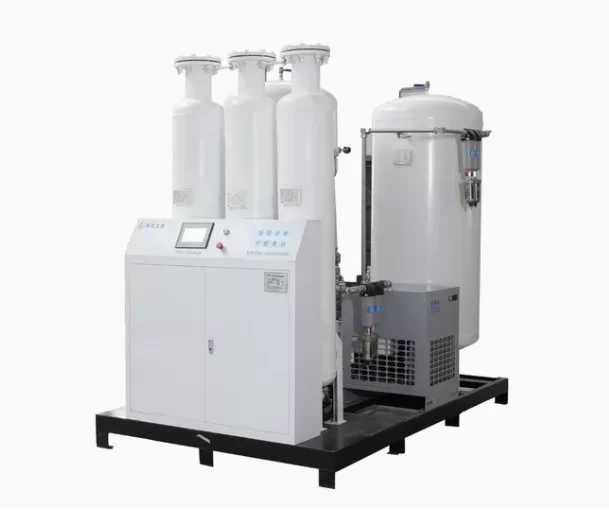
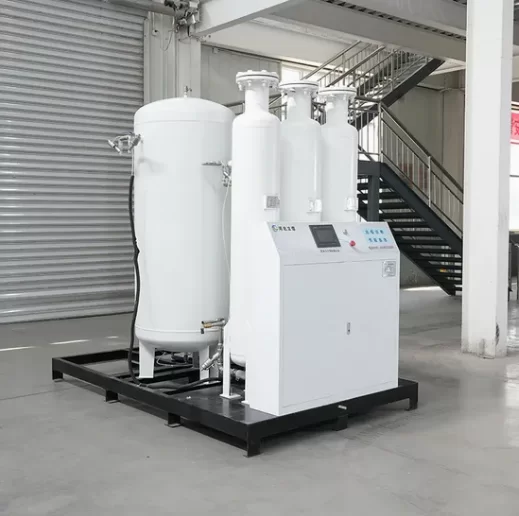
Our On-Site and APP Monitoring Hospital Oxygen Concentrators and PSA Oxygen Generators enable reliable, real-time management of medical oxygen systems. With smart monitoring technology accessible on-site and via a mobile app, they support continuous, efficient, and safe oxygen delivery for healthcare facilities.
In modern healthcare environments, a continuous and safe supply of medical oxygen is essential. Our advanced Hospital Oxygen Concentrators and PSA Oxygen Generators are integrated with intelligent monitoring systems that enable real-time tracking of key parameters, including oxygen purity, flow rate, pressure, and equipment status.
This dual-mode monitoring—available on-site through user-friendly interfaces and remotely via dedicated mobile apps—enables healthcare professionals to manage oxygen generation systems effectively. Alerts and diagnostics help prevent downtime, optimize maintenance schedules, and support patient safety.
The oxygen generators use Pressure Swing Adsorption (PSA) technology to produce high-purity medical oxygen (up to 93%), helping meet stringent medical requirements. These systems are designed for seamless integration into hospital infrastructure, enabling scalable oxygen supply solutions for a wide range of healthcare settings.
Hospitals and Medical Centers:
Ensure uninterrupted oxygen supply for critical care units, operating rooms, emergency wards, and general patient treatment.
Remote and Rural Clinics:
Provide reliable oxygen access with remote monitoring to support healthcare delivery in underserved areas.
Homecare and Assisted Living:
Enable families and caregivers to monitor oxygen therapy devices remotely, ensuring timely intervention if any issues occur.
Disaster Relief and Temporary Medical Facilities:
Support rapid deployment and real-time monitoring of oxygen systems in field hospitals and emergency response units.
Healthcare Equipment Management:
Assist facility managers with data-driven maintenance and operational insights to improve equipment service life and reliability.
Product Details
Customization: |
Available |
Warranty: |
1 Year |
Certification: |
ISO 9001, CE, ISO, CE |
Model No. |
1–100 cubic meter |
Noise Level |
Low |
||||
Voltage |
220V |
Purity |
93.5%–94.5% |
||||
Usage |
Oxygen |
Purpose |
Gas Separation |
||||
Parts |
Gas Tank |
Application Fields |
Medical |
||||
Machine Size |
Large |
Condition |
New |
||||
Oxygen Purity |
90%–96% |
Operational Principle |
Molecular Sieve Pressure Swing Adsorption |
||||
Drug and Equipment Approval Letter |
Ji Xi Zhu Zun 20202080146 |
Noise |
70 (dB) |
||||
After Sales Service |
1 Year |
Transport Package |
Wooden Box |
||||
Specification |
1–100 cubic meter |
Trademark |
Lixin Zhexing |
||||
Origin |
Hebeihengshui |
HS Code |
8419601900 |
||||
Production Capacity |
500 Sets/Year |
||||||
Product Description
This product mainly consists of an oxygen generator, an air storage tank, an oxygen storage tank, a flow meter, and other components. These parts are connected through gas piping. The oxygen generation host includes a chassis; an air compression system (air compressor, pressure sensor); a gas source purification system (refrigerated dryer, suction dryer, filter); a medical molecular sieve adsorption and separation system (adsorption tower, molecular sieve, electronic drain valve); a control system (PLC controller, contactor, touch screen); and a monitoring and alarm system (oxygen analysis module), among other components, all connected via gas pipes and cables.
Technical Features: On-Site and App Monitoring Hospital PSA Oxygen Generator Systems
The On-Site and App Monitoring Hospital PSA Oxygen Generator Systems integrate advanced technologies to provide hospitals with continuous, high-purity oxygen while enabling real-time monitoring through digital platforms. At the core, these systems use PSA (Pressure Swing Adsorption) technology, which selectively separates nitrogen from compressed air using molecular sieve adsorbents, producing oxygen concentrations typically ranging from 93% to 99%. This high purity supports medical-grade standards and helps ensure safe and effective oxygen therapy across hospital departments.
A key feature of these systems is on-site and app-based monitoring. Hospitals can track oxygen production, flow rate, purity, and system status remotely via a dedicated app or through an integrated hospital management system. Real-time alerts notify staff of deviations, such as reduced purity or abnormal pressure, enabling proactive maintenance before patient care is impacted. This capability reduces downtime and improves patient safety, particularly in emergency rooms, ICUs, and respiratory therapy units.
The modular design allows flexible installation based on hospital size and oxygen demand. Multiple concentrators can operate in parallel to provide redundancy in the event that one unit requires maintenance. In addition, built-in compressor and filtration technologies help ensure the air entering the PSA module is oil-free, dry, and free from contaminants, which supports oxygen purity and extends equipment service life.
Energy efficiency is another notable advantage. Many systems incorporate variable frequency drives (VFD) for compressors, optimized adsorption cycles, and low-pressure-drop piping to minimize electricity consumption. This helps reduce operating costs and supports hospitals’ sustainability objectives.
Safety is prioritized through automated alarms, pressure relief valves, and oxygen purity sensors. These measures help prevent potential hazards associated with high-pressure oxygen or equipment malfunction. With app monitoring, technicians can remotely adjust operating parameters, schedule preventive maintenance, and record historical performance data for regulatory compliance.
Overall, the technical features of On-Site and App Monitoring Hospital PSA Oxygen Generator Systems include high-purity oxygen production, real-time digital monitoring, modular scalability, energy-efficient operation, and enhanced safety features. Together, these capabilities help hospitals deliver reliable oxygen therapy while optimizing operational efficiency and patient care quality.
Why Hospitals Rely on On-Site and App Monitoring PSA Oxygen Generators for Efficient Oxygen Management
Hospitals increasingly rely on On-Site and App Monitoring PSA Oxygen Generator systems to streamline oxygen management and improve operational efficiency. Oxygen is a critical resource in healthcare, required for emergency treatment, ICU care, surgical procedures, and neonatal therapy. Traditional cylinder or liquid oxygen supply often involves logistical challenges, including frequent deliveries, storage space requirements, cost fluctuations, and potential shortages. On-site PSA oxygen generators address these issues by producing medical-grade oxygen continuously within hospital premises.
A primary reason for hospital adoption is continuous oxygen availability. These systems provide stable oxygen output, helping eliminate the risk of supply disruption during peak demand or emergency situations. Real-time app monitoring allows hospital staff to observe oxygen flow rates, purity, and system status across multiple departments, ensuring that each patient receives the required oxygen therapy without interruption.
Efficiency is also improved through reduced labor and operational costs. Staff no longer need to coordinate cylinder deliveries, monitor storage, or manually replace tanks. The modular design supports scaling to match hospital size, serving both large multi-department facilities and smaller clinics. Energy-efficient compressors and optimized adsorption cycles further reduce operating costs.
Safety and compliance are additional key drivers. PSA generators operate under controlled pressure conditions, reducing risks associated with high-pressure cylinders. Automated monitoring, alarms, and remote adjustment capabilities help maintain oxygen purity and support regulatory compliance, assisting adherence to healthcare standards.
Furthermore, hospitals benefit from data-driven oxygen management. Historical production data, maintenance logs, and system performance metrics can be analyzed to optimize usage, forecast demand, and plan maintenance schedules proactively. This level of control improves resource allocation and supports patient care quality.
In summary, hospitals rely on On-Site and App Monitoring PSA Oxygen Generator systems for efficient oxygen management because they ensure continuous supply, reduce operational costs, enhance safety, provide digital oversight, and enable data-driven decision-making. These benefits make the systems essential for modern healthcare facilities.
Future Development Trends for On-Site and App Monitoring PSA Oxygen Generators in Modern Healthcare
The On-Site and App Monitoring PSA Oxygen Generator is evolving rapidly, with several key trends shaping its future role in modern healthcare. As hospitals worldwide seek more reliable, cost-effective, and digitally integrated oxygen solutions, manufacturers focus on automation, data intelligence, energy efficiency, and modular scalability.
One prominent trend is the integration of advanced digital monitoring and AI analytics. Future systems are expected to increasingly use app-based platforms combined with AI to predict oxygen demand, detect potential equipment issues, and recommend preventive maintenance. Predictive analytics will help hospitals optimize oxygen production, reduce downtime, and allocate resources more effectively, enhancing patient safety while reducing operational costs.
Another trend is energy-efficient and environmentally responsible operation. New PSA systems are being designed with low-energy compressors, optimized adsorption cycles, and heat recovery technologies. Hospitals are looking for solutions that reduce electricity usage while supporting sustainability initiatives and aligning with green building objectives.
Modular and scalable designs are also becoming more widely adopted. Hospitals want systems that can be expanded as demand grows or during emergency surges, such as pandemics or disaster response. Modular generators enable rapid installation, minimize disruption, and allow cost-effective scaling without replacing the entire system.
Connectivity and IoT-enabled remote management are also becoming increasingly standard. Future generators will allow hospital engineers to monitor multiple units across different locations, receive real-time alerts, and perform remote diagnostics. This improves operational visibility, reduces manual effort, and supports compliance with healthcare regulations.
Finally, integration with hospital management systems (HMS) is expected to further streamline oxygen distribution across departments. Automated allocation based on patient needs, departmental priority, and usage patterns can help support optimal oxygen delivery while minimizing waste.
In conclusion, the future of On-Site and App Monitoring PSA Oxygen Generators in modern healthcare focuses on digital integration, predictive analytics, energy efficiency, modular scalability, and seamless connectivity. These developments will strengthen hospital oxygen management, improve patient outcomes, and support a more sustainable and intelligent healthcare infrastructure.